


Calm, Correct, Protect: A Professional Approach to Addressing Sensitive Skin and Redness
Sensitive skin and visible redness are among the most common concerns seen in practice, yet they remain some of the most complex to manage. These concerns can present in several ways, from occasional flushing and irritation to more persistent conditions such as rosacea, which, according to the National Rosacea Society, affects an estimated 16 million people in the United States. Rosacea is often characterized by facial redness, visible blood vessels, and episodes of inflammation, and can be triggered by environmental, lifestyle, and internal factors.
For those experiencing ongoing redness and sensitive skin, understanding the root cause is essential to choosing the best skincare approach.
To better understand how to approach these concerns in real practice, we turn to our KNOW BETTER SKIN PROs. These skin health professionals bring clinical experience and real-world insight into how they care for patients and clients navigating sensitive, reactive, and redness-prone skin.
Through their perspective, one thing becomes clear. Sensitive skin is not always a fixed skin type. Often it is a signal that the skin barrier has been compromised.
Jenifer Hoehne, LME, Owner of JHA Skincare & Aesthetics:
"Sensitive skin is one of the most common concerns I see in clinic, yet it's also one of the most misunderstood. Most people believe sensitive skin is simply something they're born with, but frequently sensitivity is actually a signal that the skin barrier has been compromised."
When the barrier is disrupted, the skin becomes more reactive to internal and external triggers, often presenting as redness, inflammation, dryness, and discomfort commonly associated with sensitive red skin.
Delaney Poor, LE, Managing Partner and Skin Expert at Beyond Skin Aesthetics:
"When the skin barrier is disrupted, the release of proinflammatory factors begins, resulting in itching, stinging, and the excessive activation of heat receptors. Without intervention, the skin's pH level and barrier function will remain disrupted, leaving it feeling dry, tight, and hot to the touch."

Why a System-Based Approach Matters

When it comes to sensitive, reactive, and redness-prone skin, more is not better. Doing aggressive treatments or using too many active ingredients can further disrupt the skin barrier and intensity irritation.
Jenifer:
"One of the most common mistakes I see people make when managing sensitive skin at home is simply doing too much. When skin becomes irritated, people instinctively reach for stronger products or layer multiple active ingredients to fix the issue quickly."
This often includes combining exfoliating acids, vitamin C, and physical scrubs, all of which can overwhelm compromised skin and prolong the cycle of inflammation.
Jenifer:
"When skin is compromised, the solution is rarely more products. It is often fewer, better ones."
This is where a system-based approach becomes essential, especially when identifying the best skincare for red sensitive skin.
Rather than focusing on isolated products, a structured regimen helps create consistency and stability in the skin. Each step is designed to support the next, working together to calm irritation, restore balance, and reduce visible redness over time.
Delaney:
"Because of this, we must focus on healing and then regulating the skin barrier's function. Healing improves skin comfort, and regulation improves the long-term appearance."
Starting with barrier-supportive care helps prepare the skin to better tolerate targeted treatments.
Jenifer:
"Barrier-focused skincare creates a stable foundation that allows the skin to heal and regain resilience. When the skin is properly hydrated and supported, it becomes better equipped to tolerate both active ingredients and environmental stressors."
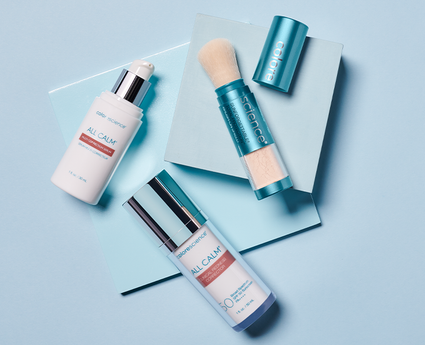
From this foundation, targeted solutions like the All Calm® Sensitive Skin Regimen can more effectively address visible redness while supporting long-term skin health.
Calm: Supporting Skin Function to Reduce Sensitivity and Redness

For sensitive and redness-prone skin, calming is not just about reducing visible irritation in the moment. It is about supporting overall skin function so the skin can respond more effectively to both internal and external stressors.
When the skin is functioning optimally, it is better able to maintain hydration, defend against environmental triggers, and reduce visible reactivity. When it is compromised, even minor triggers can lead to inflammation, discomfort, and persistent redness.
Delaney:
"A healthy barrier protects against outside inflammatory triggers and keeps skin moisturized, avoiding the dryness and irritation that lead to other skin issues."
This is why supporting the skin at a foundational level remains an important first step. It creates the conditions needed for both immediate calming and longer-term visible improvement.
Jenifer:
"Barrier-focused skincare creates a stable foundation that allows the skin to heal and regain resilience."
A simple, consistent routine using the Barrier Pro™ 1-Step Cleanser, Barrier Pro™ Serum Spray, and Barrier Pro™ Essential Moisturizer help gently cleanse, replenish hydration, and reinforce the skin barrier, supporting overall skin function and creating a more stable environment for sensitive skin. This type of routine is foundational when selecting the best face wash for redness and sensitive skin, the best serum for sensitive skin, and the best moisturizer for red sensitive skin.
From there, targeted solutions can more effectively address visible redness and sensitivity.
Delaney also highlights an often-overlooked component of skin health:
"Vitamin D is a key factor in healthy skin barrier function. It's often overlooked, but crucial to skin resilience. Vitamin D aids recovery by balancing the skin's circadian rhythm and diminishing sensitivity and irritability."
The Barrier Pro™ Serum Spray supports this process through adapDvate™ Technology, which helps stimulate the skin's ability to synthesize Vitamin D without UV exposure. At the same time, it delivers comprehensive barrier support and multi-layered hydration, helping reinforce skin resilience while improving overall skin comfort.
When paired with targeted products like the All Calm® Sensitive Skin Regimen, this approach helps visibly calm redness while continuing to support healthier-looking skin over time.
Correct: Addressing Visible Redness
 Once the skin is supported at foundational level, the next step is to address visible redness more directly. This requires targeted formulations designed not only to reduce the appearance of redness in the moment, but to support the skin over time.
Jenifer:
"When I evaluate products for sensitive or reactive skin, I look beyond what they promise. I focus on how their ingredients support barrier function, reduce inflammation, and improve skin resilience over time."
This is where targeted technologies like BioSolace® Complex play a key role.
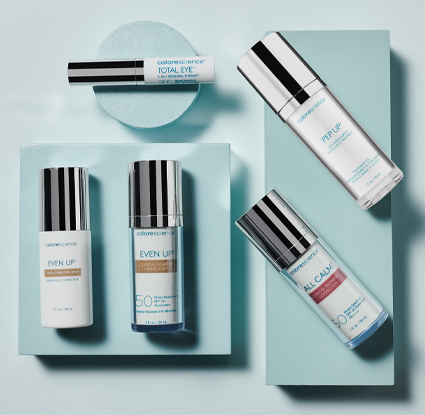
Within the All Calm® regimen, both the All Calm® Multi-Correction Serum and All Calm® Clinical Redness Corrector SPF 50 are powered by BioSolace® Complex, helping to visibly calm redness while supporting overall skin health and making them strong options for those searching for the best serum for red sensitive skin and the best color corrector for redness.
Delaney:
"I love BioSolace® Complex for three reasons. it calms and soothes irritated skin instantly. It protects from free radical damage and continued inflammation with its antioxidant and botanical support. Over time, it reduces the appearance of redness by supporting skin barrier harmony and reducing pro-inflammatory signaling."
In addition to calming visible irritation, supporting hydration and overall skin environment is key to improving how the skin looks and feels.
Jenifer:
"BioSolace® helps calm skin sensitivity and reduce visible irritation. Crystalide supports skin clarity and luminosity, helping improve the appearance of uneven tone, and NS Phytomoist provides deep hydation as a plant-derived alternative to hyaluronic acid, helping maintain moisture levels while supporting barrier function."
Together, these ingredients help create an environment where compromised skin can recover, rebalance, and become more resilient.
Rather than temporarily masking redness, this approach supports the skin in a way that leads to more consistent, visible improvement over time and supports effective skincare for red sensitive skin.
Protect: Preventing Redness Recurrence
 Once visible redness is addressed, maintaining results requires ongoing protection. Without it, the same environmental and internal triggers that contributed to sensitivity in the first place can continue to disrupt the skin and lead to recurring redness.
One of the most significant and consistent triggers is UV exposure. Even low levels of daily sun exposure can contribute to inflammation, vascular reactivity, and ongoing skin sensitivity.
Jenifer:
"Consistent sun protection is one of the most important steps. UV exposure is a major trigger for inflammation and redness."
This is why daily SPF is not just a last step, but a critical component of managing sensitive and redness-prone skin and is essential when building the best skincare for a sensitive skin routine.
The All Calm® Clinical Redness Corrector is designed to do more than protect. With tone-adapting mineral technology, it helps neutralize the appearance of redness while providing broad-spectrum sun protection and continued support through BioSolace® Complex.
Clinically Proven
 A consistent, system-based approach is not only supported by clinical experience, but also by clinical evidence.
The All Calm® Sensitive Skin Regimen has been evaluated in a clinical study published in the Journal of Cosmetic Dermatology, demonstrating measurable improvements in visible redness and overall skin appearance over time.
Across the study, participants experienced meaningful reductions in redness, with the mean Overall Redness Scale Score improving by 34% at Week and 25% at Week 12.
Visible improvement was observed early, with Mild to Moderate improvements in Global Improvement Scale scores beginning as early as Week 2. By Week 12, more than 50% of participants achieved Marked Improvement.
Equally important, patient-reported outcomes reflected consistent satisfaction. By the end of the study:
- All subjects agreed or strongly agreed that facial redness was less noticeable
- Skin appeared less inflamed
- Overall skin appearance improved
- Skin looked and felt healthier
The regimen was also well-tolerated, reinforcing its suitability for sensitive and reactive skin types.
These results support what is seen in practice. When redness is approached through calming, correcting, and protecting, using targeted formulations designed to work with the skin, consistent and visible improvement is achievable.
Click here to explore the full clinical publication.
Final Thought
Sensitive skin does not need to be overcorrected. It needs to be understood, supported, and protected.
By focusing on calming, correcting, and protecting, and by choosing formulations designed to work with the skin rather than against it, it is possible to reduce visible redness, improve comfort, and restore a healthier, more balanced appearance over time.
FAQs
Why is my skin so red and sensitive?
Various factors can cause temporary redness, such as sunburn, hot flashes, food sensitivity, a reaction to medication, or skin irritation. Some conditions can also cause redness, such as rosacea, acne, dermatitis, psoriasis, shingles, and lupus.
How to address red, sensitive skin?
Treat sensitive skin redness by using gentle, fragrance-free cleansers, calming serums (niacinamide, aloe), and daily mineral SPF (zinc oxide/titanium dioxide). Reduce inflammation with cool compresses and barrier-repairing, ceramide-rich moisturizers. Avoid triggers like hot water, harsh scrubs, and alcohol-based products.
What skincare is good for redness and sensitive skin?
For red, sensitive skin, prioritize a gentle routine focused on repairing the skin barrier, reducing inflammation, and avoiding irritants like fragrance and alcohol. Key ingredients include niacinamide, ceramides, hyaluronic acid, and chamomile. Essential products include mild cleansers, calming serums, and broad-spectrum mineral sunscreens.
What serum helps with skin redness and sensitive skin?
Serums for reducing facial redness and soothing sensitive skin include Colorescience All Calm Multi Correction Serum and Barrier Pro Serum Spray. These serums include ingredients like niacinamide, bakers yeast B-glucan, mineralized vitamin E, marine plant extracts, bisabolol, snow mushroom extract, pre, pro and post biotics, prickly pear cactus extract all which target inflammation, strengthen the skin barrier, and neutralize red tones.
The information shared in this blog should not be used as medical advice. We encourage you to consult a board-certified dermatologist, a medical professional, or a skin health expert who is trained in addressing skin conditions and concerns and making appropriate skincare and treatment recommendations for you.
Meet our KNOW BETTER SKIN PROs
Colorescience® KNOW BETTER SKIN PROs are skin health professionals dedicated to education and committed to elevating others by sharing their experience and expertise—helping others KNOW BETTER SKIN, too.

