


How Iron Oxides in Sunscreen Help Prevent Hyperpigmentation (Not Just Sunburn)
You wear sunscreen every day. You reapply. You do everything right. So why do those dark spots keep coming back?
If you've noticed hyperpigmentation, understanding what's behind it can help you find the right path to more even-toned skin. But the issue might not be what your sunscreen does. It might be what your sunscreen does not do.
Most sunscreens focus on blocking UV rays. That is a big deal, but UV is only part of the light that hits your skin. There is another kind of light called blue light, also known as high-energy visible (HEV) light. Mineral ingredients like zinc oxide can offer some defense against it, and a tinted sunscreen with iron oxides can help block even more blue light. That matters because blue light plays a real role in dark spots.
That is where iron oxides come in.
Why Do Dark Spots Keep Coming Back?
Sunscreen is made to block UV rays, UVA, and UVB. Mineral filters like zinc oxide and titanium dioxide are great at this job. They sit on your skin and bounce UV light away.
But visible light makes up almost half of all sunlight. The blue-violet end of that light, between 400 and 500 nanometers, is the most energetic. Research in the Journal of Cosmetic Dermatology shows that this blue light tells your skin cells to make more melanin. And it does this through a completely different pathway than UV-HEV light activates your melanocytes through special light-sensitive receptors called "opsins," while UV triggers melanin through DNA damage signals. The result is dark patches that can stick around even longer than sun damage from UV rays.
Here is the catch. Zinc oxide is a strong defender. It blocks UV rays and even handles some blue light in the lower range. But once you get past 400–450 nm, its coverage starts to fade. That is where iron oxides step in. When combined with zinc oxide, iron oxides help block the full blue light spectrum (400–500 nm) that a clear sunscreen alone may miss. And that missing coverage is one of the main reasons behind HEV light hyperpigmentation.
How Do Iron Oxides Prevent Dark Spots?
Iron oxides are therapeutic pigments.They come in three colors: red, yellow, and black. Each one absorbs and reflects a different part of visible light. When you blend all three with zinc oxide, you get wide coverage across the blue light range.
A tinted sunscreen with iron oxides helps to block blue light. This is not just about color or coverage. It is real, tested protection that sunscreens without iron oxides don't fully offer.
How well does it work? The same Journal of Cosmetic Dermatology study tested products made with zinc oxide, titanium dioxide, and all three iron oxides. Those products blocked 71.9% to 85.6% of blue light at key wavelengths. A product without those filters? Almost zero blue light protection.
Each iron oxide plays its own role. Yellow iron oxide blocks shorter wavelengths. Red iron oxide covers a wider range. Black iron oxide works across the full visible spectrum. Zinc oxide adds scattering power. Together, they create a layered shield against the light that triggers dark spots.
Does Blue Light Affect Deeper Skin Tones More?
Yes. Studies show that people with medium to deep skin tones are more likely to get lasting dark patches from visible light. A study in the Journal of Drugs in Dermatology showed that iron oxide sunscreens protected much better against visible light pigment changes than a non-tinted SPF 50+ sunscreen in people with darker skin.
If you are dealing with melasma, dark marks from past breakouts, or stubborn dark spots, a tinted sunscreen for melasma with iron oxides could be a great fit. The tint also does double duty. It helps cover up spots you already have while stopping new ones from forming.
Think of it as care and coverage in one step. You get to simplify your routine while giving your skin stronger, more complete protection.
What Should You Look for in the Best Sunscreen for Hyperpigmentation?
A few simple things make a big difference when you are shopping for the best sunscreen for hyperpigmentation.
-
All three iron oxide shades. Red, yellow, and black iron oxides each cover a different slice of blue light. On labels, look for CI 77491, CI 77492, and CI 77499.
-
Mineral UV filters. Zinc oxide and titanium dioxide give you UVA/UVB coverage and boost what iron oxides do.
-
Ingredients that do more than one thing. Formulas with brightening or barrier support help you get more done in fewer steps, so your routine stays simple.
-
A texture you enjoy wearing. You will only reapply a sunscreen you like. Wearability is key to managing hyperpigmentation over time.
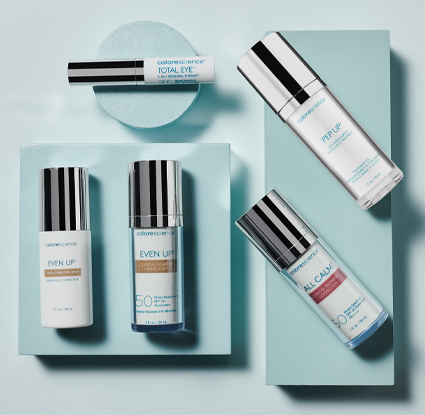
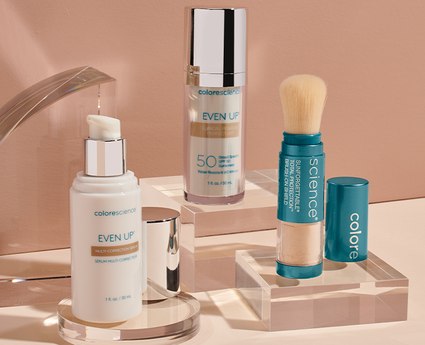
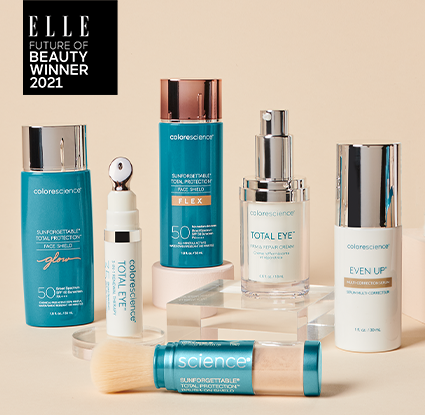
For targeted pigment care, you might consider Even Up® Clinical Pigment Perfector® SPF 50. It pairs iron oxides with the LUMIRA® Skin Brightening Complex. This formula is clinically tested to address the look of dark spots and uneven tone, with all-mineral SPF 50 protection against UVA/UVB and HEV light. In a published study, Even Up® demonstrated 71.9%–82.0% attenuation of high-energy visible (HEV) blue light across the 415–465 nm wavelength range.
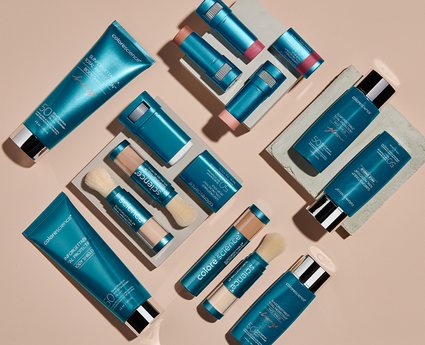
For an everyday option, Sunforgettable® Total Protection® Face Shield Flex SPF 50 is a great daily pick. It brings together iron oxides, niacinamide, zinc oxide, and EnviroScreen® Technology for defense against UVA/UVB, blue light, pollution, and infrared radiation. The tint adapts to your skin tone and feels light and easy to wear.
You can browse the full Colorescience sun protection collection to see which formula fits your routine.
Where Is All This Blue Light Coming From?
You might think blue light only matters when you are outside on a sunny day. But the truth is, it reaches your skin from more places than you would expect. The sun is the biggest source by far, but it is not the only one. Your phone, your laptop, your office lights, even a window seat, they all add up.
Here is a closer look at the most common sources and how they reach your skin:
|
Light Source |
HEV / Blue Light Exposure |
|
The Sun |
By far the largest source. Reaches skin even through clouds and window glass. UV is mostly filtered by glass, but HEV is not. |
|
Smartphone screens |
Continuous low-dose exposure at close range. Most people hold their phone 8–12 inches from their face for several hours a day. |
|
Laptop and computer monitors |
Lower intensity than the sun, but it adds up. The average professional sits in front of a screen for 6–10 hours daily. |
|
LED and fluorescent lighting |
Office and home lighting gives off HEV. The intensity is low, but it is constant throughout the day. |
|
Indoor sunlight through windows |
Sitting near a window all day means real HEV exposure. Your skin responds to that light much the same way it would outdoors. |
The Journal of Cosmetic Dermatology study notes that screen time builds your total blue light load throughout the day. So even on days when you never step outside, your skin is still soaking in blue light from the things around you.
That is why wearing a tinted sunscreen with iron oxides every day - even indoors - is a simple step that can help keep your skin tone more even over time. If your skin already tends toward dark spots, that daily indoor exposure matters more than you might think.
Your SPF Might Just Need a Pigmentation- Protection Upgrade
Stopping dark spots is about more than blocking UV. It is about shielding your skin from the full range of light it faces, visible light included.
Iron oxides prevent dark spots by closing the blue light gap that regular sunscreens miss. When paired with zinc oxide and titanium dioxide, they give your skin a full-spectrum shield. If you have been faithful to your SPF but still see spots showing up, tinted mineral sunscreen with iron oxides could be the missing piece.
Total protection should be simple. And with the right formula, it is.
Frequently Asked Questions
Q. Do iron oxides in sunscreen really help with melasma?
Yes. Studies show that sunscreens with iron oxides block visible light better than non-tinted mineral formulas. For melasma-prone skin, this extra layer of HEV defense can help you see more even, lasting results.
Q. Is tinted sunscreen better than clear sunscreen for dark spots?
A tinted sunscreen with iron oxides helps to block blue light, which is a known trigger for melanin. Clear sunscreens let most visible light through. So tinted options may give pigment-prone skin more complete daily protection.
Q. Can I wear tinted sunscreen with iron oxides every day?
Yes. Iron oxides are gentle and safe for daily use on most skin types. Daily wear is a good idea, since dark spots build up from light exposure over time.
Q. Do I still need to reapply tinted sunscreen?
Yes. Reapply at least every two hours in the sun and right after swimming, sweating, or drying off. Brush-on mineral sunscreens make midday touch-ups quick and easy, even over makeup.