


Tinted Sunscreen for Dark Skin Tones: How to Find a Shade That Is Not Ashy
What if your sunscreen could offer powerful mineral protection and blend so beautifully into your skin that no one even knew it was there? For those with deeper skin tones, "universal" tints often fall short, leaving behind a grayish or purple cast that dulls your natural radiance. The good news? Tinted mineral sunscreen formulated with the right ingredients can provide seamless protection while enhancing your complexion.
Finding a sunscreen for dark skin with no white cast requires understanding what causes ashiness in the first place and knowing which ingredients deliver both protection and a flattering finish.
Why Does Mineral Sunscreen Leave a White Cast on Darker Skin?
Facial mineral sunscreen traditionally relies on zinc oxide and titanium dioxide as active filters. While effective at blocking UV rays, zinc oxide sunscreen formulas often leave a chalky white residue that sits on top of the skin rather than blending in.Tinted mineral formulations with iron oxides may offer a more natural-looking finish across a range of skin tones, while also helping to block blue light.
So why does this happen? It comes down to two factors working against each other: particle size and the absence of pigmentation. Mineral UV filters are inherently white, and when they're ground down to ultra-fine particles to reduce visible whiteness, they don't disappear entirely; they simply scatter light differently. On lighter skin, that scattered light blends in. On deeper skin tones, it reflects unevenly against the natural melanin, creating a flat, chalky, or grayish appearance.
Without added pigments to offset this optical mismatch, even so-called "invisible" formulas can oxidize and shift in tone throughout the day, making the cast more pronounced the longer the sunscreen is worn. It's not just a cosmetic inconvenience; it's a wearability barrier that can discourage consistent daily protection.
What Makes Tinted Sunscreen Different for Dark Skin Tones?
Tinted sunscreen for the face combines broad-spectrum mineral actives with iron oxide pigment to create visible, skin-matching color. According to Harvard Health, tinted sunscreens use different formulations and concentrations of iron oxides mixed with titanium dioxide to provide protection while matching various skin tones.
Iron oxides are the key ingredients that give tinted formulas their color. Black, red, and yellow iron oxides blend together to create shades ranging from light to deep. For sunscreen for darker skin tones, formulas with higher concentrations of warm-toned iron oxides deliver seamless coverage and enhance your natural complexion.
Can Tinted Sunscreen Help with Hyperpigmentation?
Iron oxides inside tinted sunscreen formulas block wavelengths of light that standard SPF formulas don't. This allows tinted sunscreen to help with hyperpigmentation - one study published in the International Journal of Dermatology highlights how mineral sunscreens plays a key role in managing hyperpigmentation, dark spots and uneven skin tone by leveraging iron oxides against visible and UV light.
Visible light, in particular, is implicated in worsening hyperpigmentation concerns - a study published in the Journal of the American Academy of Dermatology notes that visible light can cause more noticeable, persistent hyperpigmentation than UVA alone, particularly in deeper skin tones. For anyone prone to melasma or post-inflammatory dark spots, choosing spf sunscreen with iron oxides supports immediate protection and longer term, healthier skin complexion.
How Do You Match Your Undertone When Choosing a Tinted Sunscreen?
Matching your skin goes beyond surface depth. Undertone plays an equally important role in achieving a natural, radiant finish. Most skin falls into warm, cool, or neutral undertones:
-
Warm undertones have golden, yellow, or peachy hues
-
Cool undertones feature pink, red, or bluish notes
-
Neutral undertones balance both warm and cool tones
When selecting a tinted sunscreen look for shades that complement your undertone rather than simply matching your perceived skin depth. A formula with warm sienna or golden tones works beautifully for warm undertones, while pink-based tints suit cooler complexions.
Test shades along your jawline in natural light rather than on your hand or wrist. Allow five to ten minutes for the formula to oxidize and settle, as many tinted products adjust slightly after application.
What Should You Look for on a Tinted Sunscreen Label?
Reading ingredient lists helps you identify formulas designed for melanin-rich skin. Prioritize products that list iron oxides (CI 77491, CI 77492, CI 77499) among the inactive ingredients. As NPR reports, around 3% iron oxide concentration likely offers solid visible light protection.
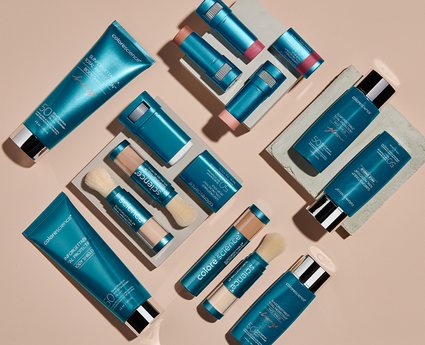
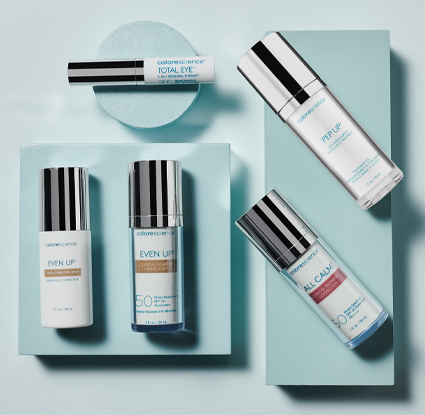
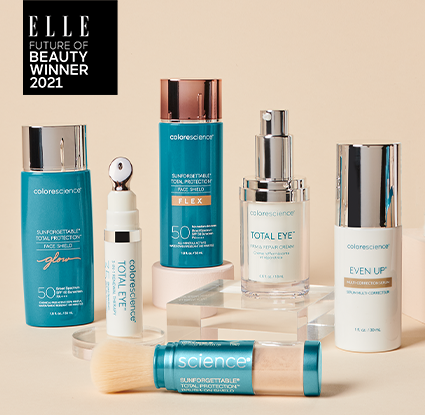
Colorescience No Show sunscreen is non-nano and doesn't have a white cast even on darker skin tones (but does not have iron oxide). Face Shield Flex has iron oxide and is available in 6 tone-adapting shades
Key label indicators for mineral sunscreen for dark skin include:
-
Iron oxides listed in inactive ingredients
-
Zinc oxide as the active mineral filter
-
Shade range specifically designed for deeper complexions
-
Buildable or adjustable coverage
-
Free from harsh chemicals, parabens, and fragrance
How Does Face Shield Flex Adapt to Deeper Skin Tones?
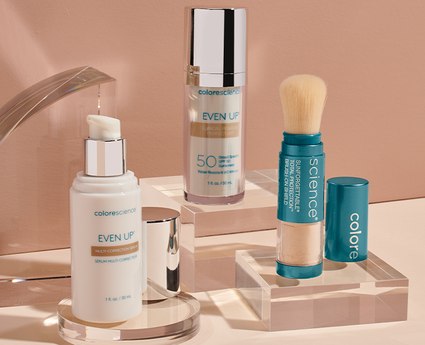
Sunforgettable Total Protection Face Shield Flex SPF 50 features innovative encapsulated iron oxide pigments that bloom in your fingertips to deliver tone-adapting coverage. Available in six flexible shades, each formula adjusts to a broad range of skin tones and undertones.
The 12% zinc oxide formula provides broad spectrum SPF 50 protection, while the iron oxides create buildable color,blur imperfections and even skin tone. The demi-matte finish looks polished without appearing heavy or cakey.
To activate the shade-matching technology, dispense onto fingertips and rub gently until the white color transforms. Apply to moisturized skin and blend for even coverage. The shade fully develops within one to two minutes, adjusting seamlessly to your natural complexion.
Can You Add Luminosity Without Sacrificing Protection?
For those who prefer a dewy, radiant finish, Sunforgettable Total Protection Face Shield Glow SPF 50 delivers champagne-lit luminosity in a flattering golden peach tone. The lightweight formula contains 12% zinc oxide along with iron oxides for comprehensive environmental defense.
Face Shield Glow layers beautifully under makeup or wears alone for a natural, healthy sheen. The antioxidant-rich formula hydrates while protecting against UVA, UVB, blue light, pollution, and infrared radiation through patented EnviroScreen Technology.
Both Face Shield Flex and Glow can be mixed together to customize your ideal shade and finish. Since all Total Protection Collection products contain the same mineral actives, you never compromise protection for color.
Tips for Flawless Application on Melanin-Rich Skin
Achieving seamless coverage requires proper technique:
-
Start with clean, moisturized skin
-
Dispense product onto fingertips and warm between hands
-
Press and pat into the skin rather than rubbing aggressively
-
Build coverage gradually, waiting one minute between layers
-
Set with a mineral brush-on sunscreen for long-lasting wear
-
Reapply every two hours, especially during outdoor activities
FAQs
1. Why does my sunscreen turn gray on my skin?
Gray or ashy tones occur when mineral filters lack sufficient iron oxide pigments to match your complexion. Choosing a tinted formula with warm-toned iron oxides prevents the white cast typical of standard zinc oxide sunscreen.
2. Are tinted sunscreens better for hyperpigmentation?
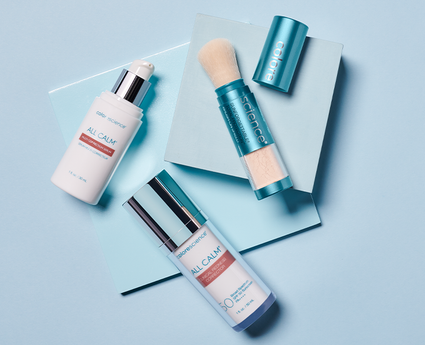
Yes. Iron oxides in tinted formulas block visible light, which contributes to dark spots and melasma in skin of color. All Colorescience sunscreens protect against UVA/UVB, blue (HEV) light, infrared radiation, and pollution and help prevent free radical formation. Protection that goes well beyond SPF.
3. How do I know if a tinted sunscreen will match my dark skin tone?
Look for brands offering multiple shades designed for deeper complexions. Test along your jawline in natural light and allow several minutes for the product to oxidize before judging the match.
4. Can I layer tinted sunscreen under foundation?
With Face Shield Flex, you may find you don't need foundation at all. Designed to deliver great coverage alongside advanced all-mineral protection, Flex can simplify your routine without compromising on either front. The iron oxides in this tinted formula also help block blue light so you're getting more than just a beautiful finish.