



The Different Types of Sunscreen Explained
Most people know that sunscreen is crucial for protecting against sunburn, sun damage, and skin cancer. However, a quick trip to the store to purchase new sunscreen can be an overwhelming experience.
With a range of different sunscreen formulas, application options, SPFs, and more, it can feel impossible to determine the best type of sunscreen for your needs.
We’re here to demystify the world of sunscreen. Read on to learn all about the effects of not wearing sunscreen, different types of sunscreen, the pros and cons of each, and how to choose the best solution to protect your skin.
- Why is sunscreen important?
- What Are the Different Types of Sunscreen?
- Sunscreen Applications
- Sunscreen for Your Body
- Sunscreen for Your Face
- Sunscreen for Different Skin Types
- Comparing SPF Levels
- Water-Resistant Sunscreen
- Specialty Sunscreen
- How to Choose the Right Sunscreen for You
- Our Favorite Sunscreen Products
Why is sunscreen important?
Sunscreen protects your skin from the sun’s harmful ultraviolet rays. Wearing sunscreen every day has both short-term and long-term benefits. Sunscreen can protect you from:
-
Sunburns: Sunburns are caused by overexposure to UV rays. Sunburns can begin in as little as 20 minutes. UV rays penetrate the skin and cause sunburn, resulting in redness, sensitivity, and even blistering.
-
Premature aging: Overexposure to the sun’s rays can damage the collagen and elastin in your skin. As these compounds break down, they can cause wrinkles, fine lines, and other signs of premature aging. Wearing sunscreen can help preserve collagen and elasticity and keep your skin looking youthful longer.
-
Skin cancer: Many types of skin cancer are caused by UV rays. Sunscreen can protect against melanoma, basal cell carcinoma, and other common skin cancers.
-
Sunspots: Also known as age spots, sun spots are darkened skin patches caused by overexposure to UV rays. They can occur on hands, faces, or any other area regularly exposed to the sun.
For optimal sun protection, it’s important to wear sunscreen every day, even if it’s cloudy or you don’t plan on spending significant time outdoors. The sun’s rays can still cause damage through clouds, windows, and other obstructions.

What Are the Different Types of Sunscreen?
In the most general sense, sunscreen falls into two main categories: mineral sunscreen and chemical sunscreen. That said, sunscreen can be subcategorized in other ways as well. It can be categorized based on the body area it’s designed for, SPF levels, special features like water resistance, and application types such as:
-
Liquid
-
Spray
-
Powder
Each subcategory has its own nuances, making sunscreen even more difficult to decipher—especially if you’re unsure how to interpret the label.
If you’re stumped about sunscreen, we’re here to help. Let’s examine the different categories of sunscreen and the nuances of each.
Chemical Sunscreen
Most classic sunscreen formulas are what’s known as chemical sunscreens. These sunscreens work by absorbing the sun’s rays and chemically converting them into heat, which is then released into the atmosphere.
While any sunscreen is better than no sunscreen, several states and countries have banned the use of chemical sunscreen, so be sure to check before you travel. They can wash off into the water and potentially impact aquatic ecosystems like corals and algae, causing deformation, coral bleaching, and other impacts.
Mineral Sunscreen
Mineral sunscreens are an alternative to chemical sunscreens. Instead of sinking into your skin and absorbing UV rays, these sunscreens coat your skin in a thin layer of powdered minerals that deflect the sun’s rays. Mineral sunscreens are most commonly made from titanium dioxide and zinc oxide, two minerals that are safe for your skin and the environment.
Our mineral sunscreens go beyond UVA/UVB protection to defend against other environmental stressors, including pollution, blue (HEV) light, and infrared radiation using our patented EnviroScreen® Technology. While some mineral sunscreens can leave behind a white cast, ours are carefully formulated to blend seamlessly with your complexion so you can wear them confidently with or without makeup - we even have options to replace your complete makeup routine with all SPF products!

Sunscreen Applications
Another consideration when shopping for sunscreen is the application method. Generally, sunscreens come in the form of:
-
Lotion: The most traditional type of sunscreen is lotion, a thick liquid formula applied by hand. Lotion sunscreens tend to be chemical sunscreens. They can be easily applied to the face or entire body.
-
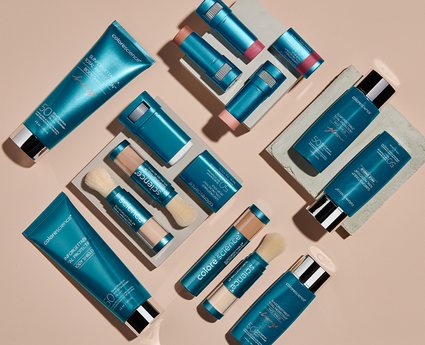
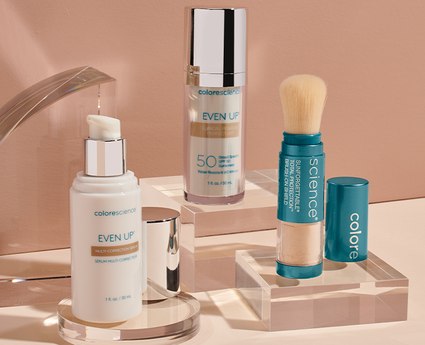
Powder: When shopping for mineral sunscreens, you’ll often find powdered formulas, which can be applied with a brush, much like setting powder. These sunscreens are typically intended for the face and are usually available in translucent or tinted options.
-
Stick: Stick sunscreens provide an easy, invisible application and are applied directly to the face. Lip balm with SPF offers the same convenience while keeping lips hydrated and protected.
-
Spray: Spray sunscreen is an aerosol formula sprayed directly onto the body. Although spray sunscreens are generally easier to apply, they can be challenging to distribute evenly and may result in product wastage.
Picking the right application method for your needs comes down to personal preference. The most important thing to remember is to apply evenly across your entire body, focusing on hard-to-reach spots that may be overlooked, such as under your eyes.
Sunscreen for Your Body
When shopping for body sunscreen, broad-spectrum coverage is key. Broad-spectrum sunscreen shields against UVA and UVB rays. UVB rays cause immediate damage, such as sunburns, whereas UVA rays contribute to long-term damage, such as premature aging.
Always apply body sunscreen evenly to exposed skin. Rub it in thoroughly at least 15 minutes before sun exposure. Water-resistant sunscreens are a great choice if you're swimming or sweating. Just remember to reapply often.
Sunscreen for Your Face
Choosing a sunscreen for your face is typically a more careful process. Many facial sunscreens are designed to suit different skin types, such as oily, dry, or sensitive skin. We recommend looking for non-comedogenic options, which means they won’t clog your pores.
To make your life easier, many facial sunscreens double as skincare and makeup products. Some offer anti-aging effects or ultra-hydrating formulas, whereas others are designed to double as tinted moisturizers.
Sunscreen for Different Skin Types
Fortunately, the modern sunscreen market offers options for various skincare concerns, from breakout-prone skin to sensitive skin and more.
Generally speaking, mineral sunscreens are best for those with skincare concerns. Explore mineral sunscreens if you face any of the following:
-
Sensitive skin
-
Oily skin
-
Dry skin
-
Acne-prone skin
-
Rosacea
It’s also important to remove your sunscreen completely at the end of each day before doing your skincare routine. If you have red, dull, or oily skin, you may want to pair one of our primers with your sunscreen, which can also help your makeup last longer.

Comparing SPF Levels
Another consideration when selecting sunscreen is SPF level. SPF level is the protection level a sunscreen offers against UVB rays. SPFs work as follows:
-
SPF 15: blocks 93% of UVB rays
-
SPF 30: blocks 97% of UVB rays
-
SPF 50: blocks 98% of UVB rays
-
SPF 100: blocks 99% of UVB rays
Generally speaking, it’s recommended that you always wear sunscreens with SPF 30 or higher. As SPFs reach above 30, the increase in UVB rays blocked is quite negligible.
While many assume SPF 100 means 100% protection, that isn’t the case. Whether you’re using SPF 30 or SPF 100, you’ll still need to reapply regularly when exposed to the sun.
Water-Resistant Sunscreen
You may have noticed the term “water-resistant” appearing on more sunscreen labels recently. Water-resistant sunscreen is specifically formulated to withstand sweat or submersion in water for a set period of time, which may vary depending on the sunscreen's water-resistance level.
Water resistance is determined by the FDA based on a test. To be considered “water resistant,” sunscreen should protect wet skin for up to 40 minutes. To be considered “very water resistant,” sunscreen should protect the skin for up to 80 minutes. Depending on the type of water resistance of your specific sunscreen, you’ll need to reapply every 40 to 80 minutes.
If you often swim, play sports, run, or do other physical activity outdoors, a water-resistant sunscreen may be the best fit for you to ensure you’re sufficiently protected.
Specialty Sunscreen
In some cases, sunscreens are designed to meet specific needs, such as:
-
Babies’ and kids’ sunscreen: These sunscreen solutions are typically designed to be extra gentle on kids since they’re known to have sensitive skin. They are often fragrance-free, have high SPF, and offer broad-spectrum protection.
-
Tinted sunscreen: Many people opt for tinted sunscreen to make mornings easier. These sunscreens act like tinted moisturizers, adding a bit of extra coverage along with sun protection.
-
Dermatologist-recommended sunscreen: For the most skin-friendly formulas, look for sunscreens recommended by dermatologists. These sunscreens are more gentle, non-comedogenic, and great for those with skincare concerns.
-
Reef-friendly sunscreen: All mineral sunscreens are considered reef and marine life-friendly so it’s great for you and a safer choice for the environment.
How to Choose the Right Sunscreen for You
With all the options on the shelves and online, it’s important to know what to consider when choosing the right sunscreen. Now that you have a better understanding of the main types of sunscreen and how they differ, here are some key takeaways to keep in mind when making your purchase:
-
Make sure you’re getting sufficient SPF protection—remember, SPF 30 or higher is best.
-
Choose a broad-spectrum sunscreen that blocks against both UVA and UVB rays for more comprehensive protection.
-
Find the right sunscreen for your skin type; mineral sunscreens are typically the safest.
-
Look for safe sunscreen ingredients, like zinc oxide and other minerals.
-
Using a fragrance-free sunscreen is less likely to cause irritation.
-
Water-resistant sunscreen is ideal for those who are active because it can protect you even when you’re wet.
-
Spray sunscreen may seem easy to apply, but it also leaves you at risk of uneven coverage.
-
Teach kids sun safety awareness and the importance of sunscreen from a young age.
In addition to using the right type of sunscreen, proper application and reapplication are just as important. Check out our blog on how often to reapply sunscreen to make sure you’re using your sunscreen correctly for maximum sun protection.
And, whatever you do, never skip sunscreen, even if it’s cloudy or you’ll be inside most of the day.

Our Favorite Sunscreen Products
Looking for great sunscreen products that provide skin-friendly, broad-spectrum protection? We have you covered. Read on to learn our favorite 100% all-mineral active sunscreen products:
-
Total Protection® No-Show™ Mineral Sunscreen SPF 50: For a barely-there application, look to our Total Protection® No-Show™ Mineral Sunscreen. This mineral sunscreen blends seamlessly into the skin and dries completely clear. Its lightweight formula will leave your skin feeling so soft you’ll forget it’s even there.
-
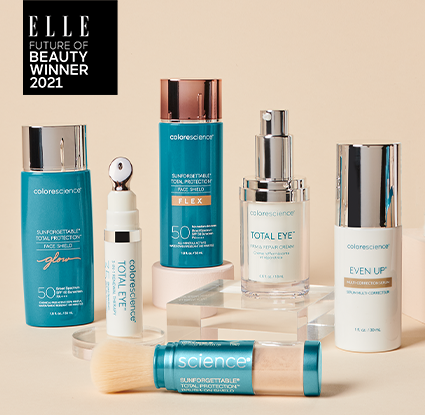
Sunforgettable® Total Protection® Face Shield Flex SPF 50: Get SPF 50 sun protection with tinted, buildable coverage. Sunforgettable® Total Protection® Face Shield Flex SPF 50 includes shade-adjusting iron oxide pigments that adapt to your skin tone when blended for a flawless look.
-
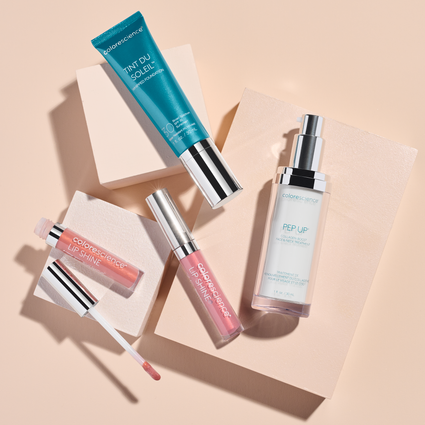
Peptide Lip Shine SPF 30: Choose the Peptide Lip Shine SPF 30 for an SPF lip product that hydrates, plumps, and protects with a nourishing blend of peptides, hyaluronic acid, and broad-spectrum sun protection—available in various shades.
-
Sunforgettable® Total Protection® Color Balm SPF 50: This all-mineral, broad-spectrum SPF 50 color balm provides rich, blendable pigment while protecting and nourishing your skin. Use it on your lips, cheeks, and eyelids for a pop of color.
-
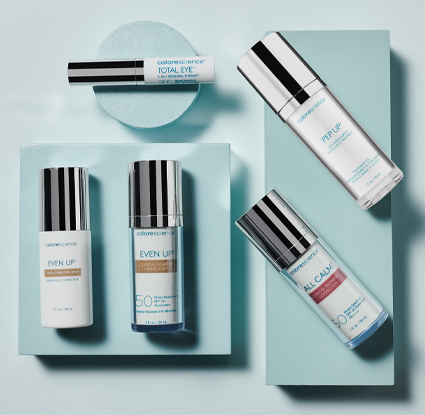
Total Eye® 3-in-1 Renewal Therapy SPF 35: Hydrate, conceal, and protect your under-eye area with this all-in-one anti-aging eye cream, SPF 35 sunscreen, and color-correcting concealer. Plus, reduce the appearance of dark circles, puffiness, and fine lines over time.
Find a Sunscreen Formula That Works for You
Spending time in the sun is much more enjoyable when you feel confident that you’re protected. It’s crucial to find the right sunscreen for your needs so that you can take care of your skin and spend time outside worry-free.
Our diverse line of mineral sunscreens are safe for sensitive skin and all ages. Customize your skincare routine with Colorescience to make skin protection seamless. Shop our collection of physical sunscreens to upgrade your sun protection today.