

You take good care of your face. So why does the skin on your neck and chest look years ahead of everything above your jaw? Thin, crinkled skin and blotchy reddish-brown patches on the decolletage are some of the most common and most missed signs of sun damage, and they show up right where sunscreen tends to stop.
The good news is that the same care you give your face works here too. Once you know what causes crepey skin and decolletage discoloration, you can protect the area and soften how it looks over time.
Why does your neck and chest show sun damage first?
The skin on your neck and chest is thinner than the skin on your face, and it has fewer oil glands, so it dries out and creases faster. Add years of sunlight through car windows and weekends outside, and the damage adds up in a spot most people forget to protect.
Dermatologists call this buildup photoaging. According to the American Academy of Dermatology, sun exposure over time leads to wrinkles, age spots, loose skin, and a blotchy complexion. On the neck and chest, that often looks like thin, crepey texture and uneven color that seems to appear out of nowhere.
If you want the full picture of how sunlight changes skin over the years, the Cleveland Clinic breaks down what sun damage does and how to guard against more of it.
What is that reddish discoloration on your decolletage?
That mottled, reddish-brown patch in a V-shape across your chest and along the sides of your neck has a name. Dermatologists call it poikiloderma of Civatte. The Cleveland Clinic describes it as a harmless skin condition marked by reddish-brown discoloration, usually on the sides of the neck, the upper chest, and the cheeks, with long-term sun exposure as the main cause.
The Mayo Clinic notes that poikiloderma shows up most on the neck and upper chest that get regular sun, and that it can worsen if those areas keep taking exposure.
One telling detail: the skin right under your chin often stays clear. That shaded spot rarely sees direct sun, so it dodges the damage the rest of the area collects. The Skin Cancer Foundation points out this same pattern, noting that the neck and central chest develop enlarged blood vessels that leave the skin looking permanently red, while the shaded skin under the chin stays spared.
It's a cosmetic concern, not a health one. Still, it's a clear sign the area could use more consistent protection going forward.
Can you reverse sun damage on your chest?
Some of it, yes. You can't erase every trace of past sun exposure, but you can improve how the skin looks and stop new damage from accumulating.
The Skin Cancer Foundation lays out a simple two-part protocol its dermatologists recommend, which is to protect in the morning and repair at night. Sunscreen every single day comes first, since steady protection can help slow and even soften the look of existing damage. At night, ingredients that repair the skin barrier, reduce inflammation and pigmentation, and support collagen and elastin production while you sleep.
For deeper texture and tone concerns, in-office options exist too. The AAD notes that dermatologists often pair treatments like chemical peels, lasers, skin tightening, and IPL or BBL with topical skincare to address loose skin and blotchy color on the chest.
Colorescience has more on softening the look of past exposure in its guides on treating sun-damaged skin and repairing the look of summer sun damage.
How do you protect your neck and chest every day?
Daily protection is the part you control, and it makes the biggest difference. Sunscreen isn't only for beach days. It's the one habit that guards against more crepey skin and discoloration forming.
Neck and chest skincare routine:
- Extend your sunscreen down. Whatever you apply to your face, carry it past your jaw, down your neck, and across your chest. These spots need the same coverage your face gets.
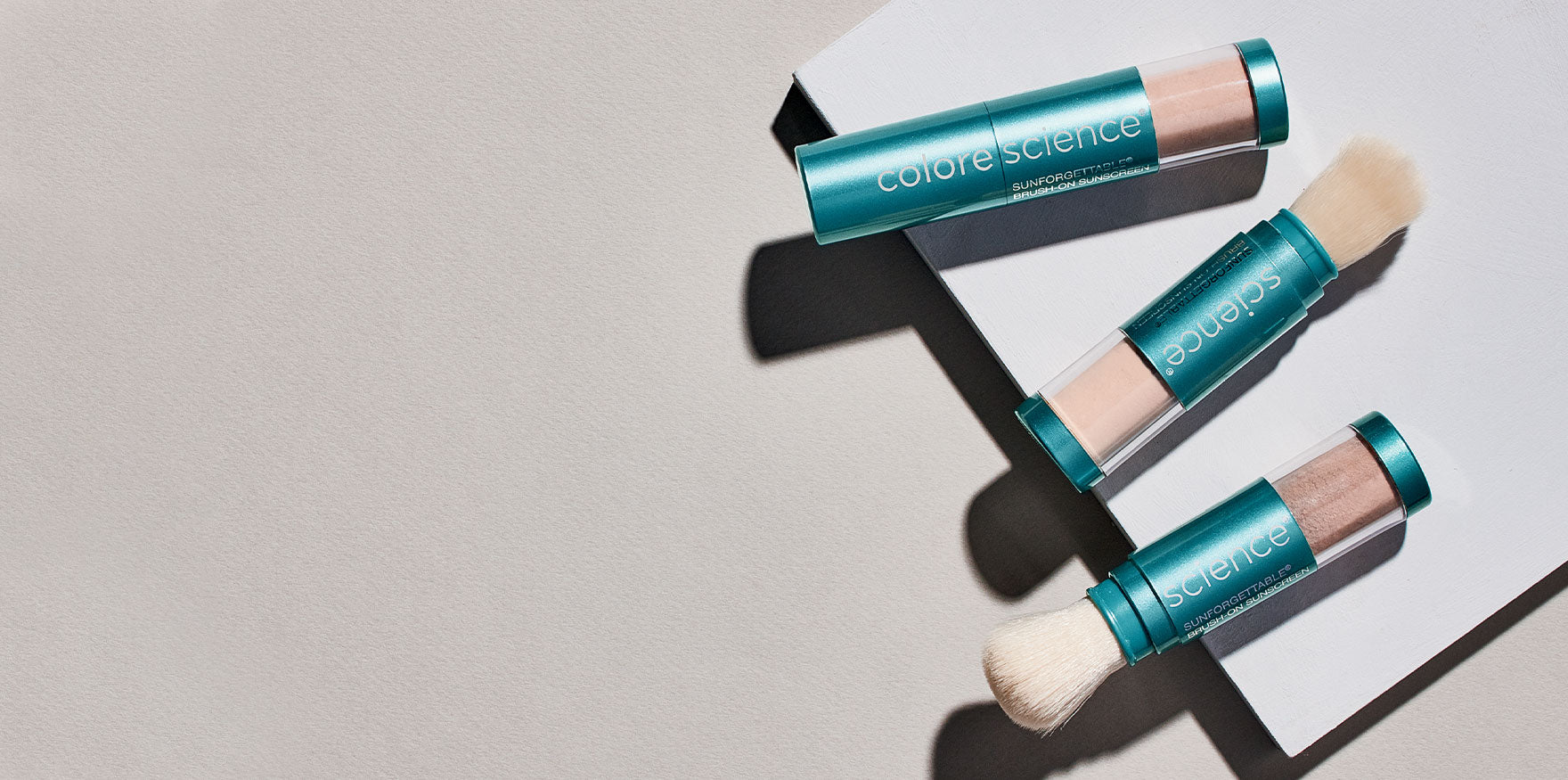
- Reapply throughout the day. The Cleveland Clinic recommends reapplying every two hours, and more often after sweating or swimming.A brush-on powder sunscreen can make midday touch-ups simple, even over makeup. The Sunforgettable® Total Protection® Brush-On Shield SPF 50 is a portable, mess-free option worth considering. It's water- and sweat-resistant for up to 80 minutes and goes beyond UV with blue light, pollution, and infrared defense.
- Cover up when you can. A wide-brim hat and light layers add shade the sun can't reach.You might also want to look into UPF-rated clothing, which is designed to block both UVA and UVB rays. A UPF rating of 30 or higher offers solid protection and can be a helpful layer on top of your sunscreen, especially during long stretches outdoors.
- Don't skip cloudy days. UV rays reach your skin even when the sky is overcast.
Curious about how sunscreen shields your skin? Colorescience explains it in how sunscreen works and shows what happens to unprotected skin in the effects of skipping sunscreen.
When you want protection that also evens out how your chest looks, a tinted mineral option is worth a look. A tinted sunscreen with iron oxides helps block blue light, and the soft tint can gently blur the look of redness while you wear it. The Sunforgettable Total Protection collection and the brush-on shades in the Sunforgettable Brush collection make it easy to dust protection over your neck and chest through the day.
Most skin health professionals trust and recommend Sunforgettable® Total Protection® Face Shield Flex SPF 50 for daily 5-Point Protection against UV, HEV blue light, infrared radiation, and pollution, while it also provides free radical defense. You can find it in the Total Protection Face Shield collection.
For full-body coverage, you might also consider the Total Protection® No-Show™ Body Shield SPF 50 and the Total Protection® Body Shield Glow SPF 50. Both feature EnviroScreen® Technology for broad-spectrum defense against UVA/UVB, blue light, pollution, and infrared radiation. The No-Show formula is completely sheer and white-cast-free, so it blends right into skin with a velvety finish. The Body Shield Glow adds a pearlescent pink shimmer for a luminous look in the sun. Both are lightweight, water-resistant for up to 80 minutes, and work well across a wide range of skin types and tones.
Ingredients that help crepey neck and chest skin
Once protection is handled, the right treatment ingredients help firm and smooth the look of the area over time.
Peptides lead the list. They support your skin's natural collagen and elastin, the proteins that keep skin looking firm and springy. The Skin Cancer Foundation even suggests adding a peptide product to a repair routine.
That's where a targeted serum can earn a spot in your routine. You may want to try Pep Up® Collagen Boost Face & Neck Serum, formulated with 10 peptides plus antioxidants and deep hydration. It's a smart pick for a minimal routine because those peptides deliver several benefits in one step, and it's designed for the face, neck, and decolletage. When you're ready to layer on protection, the Total Protection Collection guards against the environmental aggressors that speed up visible aging, including UVA and UVB, blue light from screens, pollution, and infrared radiation.
Hydration goes a long way here too. Because neck and chest skin is thin and dries out fast, a nourishing formula helps plump and soften crepey texture so the area looks smoother.
When should you see a dermatologist?
Most crepey skin and decolletage discoloration is cosmetic. Still, it's smart to have a professional take a look, especially if the color or texture changes. The Cleveland Clinic recommends talking to your provider about any new shifts in your skin, since early attention can rule out anything more serious.
Sun protection sits at the heart of skin cancer prevention too. Colorescience covers that link in its guide to skin cancer awareness and sun safety, and a yearly skin check keeps the whole area on your radar.
Neck & Chest Sun Damage FAQs
What causes crepey skin on the neck and chest?
Thin skin, fewer oil glands, and years of sun exposure are the main reasons. Over time, UV rays break down collagen and elastin, so the skin looks thin and crinkled.
Is decolletage discoloration a sign of sun damage?
Often, yes. The reddish-brown V-shape across the chest is usually poikiloderma of Civatte, a cosmetic condition the Cleveland Clinic links mainly to long-term sun exposure.
Can sunscreen help fix sun damage that's already there?
Sunscreen can't erase past damage, but daily use helps prevent more and can soften how existing damage looks over time when paired with a good repair routine.
Which ingredients help firm crepey skin?
Peptides support the collagen and elastin that keep skin firm, and hydrating ingredients plump thin, dry skin so texture looks smoother.
Do I really need SPF on my neck and chest every day?
Yes. These areas catch daily UV through windows and outdoors, so consistent protection is the best way to guard against new crepey skin and discoloration.