
Have you noticed fine lines deepening or your skin losing its firmness? Part of what you're seeing is a natural, gradual slowdown in collagen and elastin. Peptides are short chains of amino acids that act as messengers, helping signal skin cells to make collagen, elastin, and other proteins that keep skin looking firm and smooth.
Understanding how peptides work can help you choose products with realistic expectations. Rather than covering up signs of aging, peptides help improve the look of fine lines and firmness over time.
What Are Peptides and Why Does Your Skin Need Them?
Peptides are composed of 2-50 amino acid residues linked together. Think of them as smaller versions of proteins, your skin's building blocks. If amino acids are the molecular alphabet, peptides are short words spelled from it. On the skin, a peptide works a lot like a text message: a short, specific note that helps prompt skin to do something, such as build more collagen. While proteins like collagen are too large to penetrate the skin's surface, peptides are much smaller, and many are paired with a fatty acid (you'll see 'palmitoyl' on the label) to help them move into the skin's upper layers.
As we age, skin makes less collagen and elastin. That slowdown contributes to visible signs of aging: wrinkles, loss of firmness, uneven texture, and reduced elasticity. Collagen production is commonly estimated to decline about 1% per year in adulthood.
The good news? Topically applied peptides can help support the skin's own collagen and elastin over time.
“I explain peptides to clients as messengers. They don’t replace collagen. They help remind the skin to keep making it. That’s a slower, steadier kind of change, and it’s why I ask people to give a peptide serum a full two to three months before judging it.” — Alex Lang, Director of Global Education
Why We Love Peptides
At Colorescience, peptides are one of our favorite ingredients to formulate with. Here's why:
- They're great communicators, when formulated well. The right peptide, at the right concentration, in a stable formula sends skin a precise message, whether that's "build more collagen" or "calm excess pigment."
- They're backed by clinical research. Well-formulated peptide products, like Pep Up® Collagen Boost Face & Neck Serum, have published clinical results behind them (more on that below).
- They're gentle and well tolerated. Peptides are gentle enough for daily, twice-a-day use and tend to be less irritating than retinoids or acids, which makes them easy to stick with. In its published clinical study, Pep Up® was well tolerated.
How Do Peptides for Anti-Aging Actually Work?
Peptides don't all send the same message. Some are up-regulators: they send a "do more" signal, such as building collagen and elastin. Others are down-regulators: they send a "do less" signal, such as slowing collagen breakdown, softening the look of expression lines, or calming excess pigment production. Within each group are different peptide families, each with its own job, which is why well-formulated products often combine several to help slow the visible signs of aging from more than one direction.
- Signal Peptides stimulate collagen production. These peptides, like Palmitoyl Tripeptide-5 and Palmitoyl Tripeptide-1, mimic your body's natural signals that prompt fibroblasts to create more collagen and elastin. Acetyl tetrapeptide-9, another signaling peptide in Pep Up®, helps support collagen I and lumican, a protein that helps organize collagen, for skin that looks firmer and thicker.
- Carrier Peptides deliver essential minerals. Copper peptides (GHK-Cu) have been studied for their role in skin remodeling and antioxidant activity. Much of the evidence comes from lab work and small clinical studies.
- Expression-Line Peptides target the look of movement lines. Dipeptide diaminobutyroyl benzylamide diacetate, one of the peptides in Pep Up®, helps relax the look of expression lines on the forehead, laugh lines, and crow's feet.
- Enzyme Inhibitor Peptides slow collagen breakdown. These peptides reduce the activity of enzymes that degrade collagen, helping skin hold on to its firmness. Palmitoyl tripeptide-5, found in Pep Up® and our Total Eye® products, helps boost collagen production while also helping protect collagen from degrading enzymes.
- Pigment-Regulating Peptides help calm excess pigment. Hexapeptide-2, an inhibiting (down-regulating) peptide in Pep Up® Collagen Boost Face & Neck Serum, helps decrease melanin synthesis and melanin content in skin cells, helping reduce the look of dark spots and uneven tone over time.
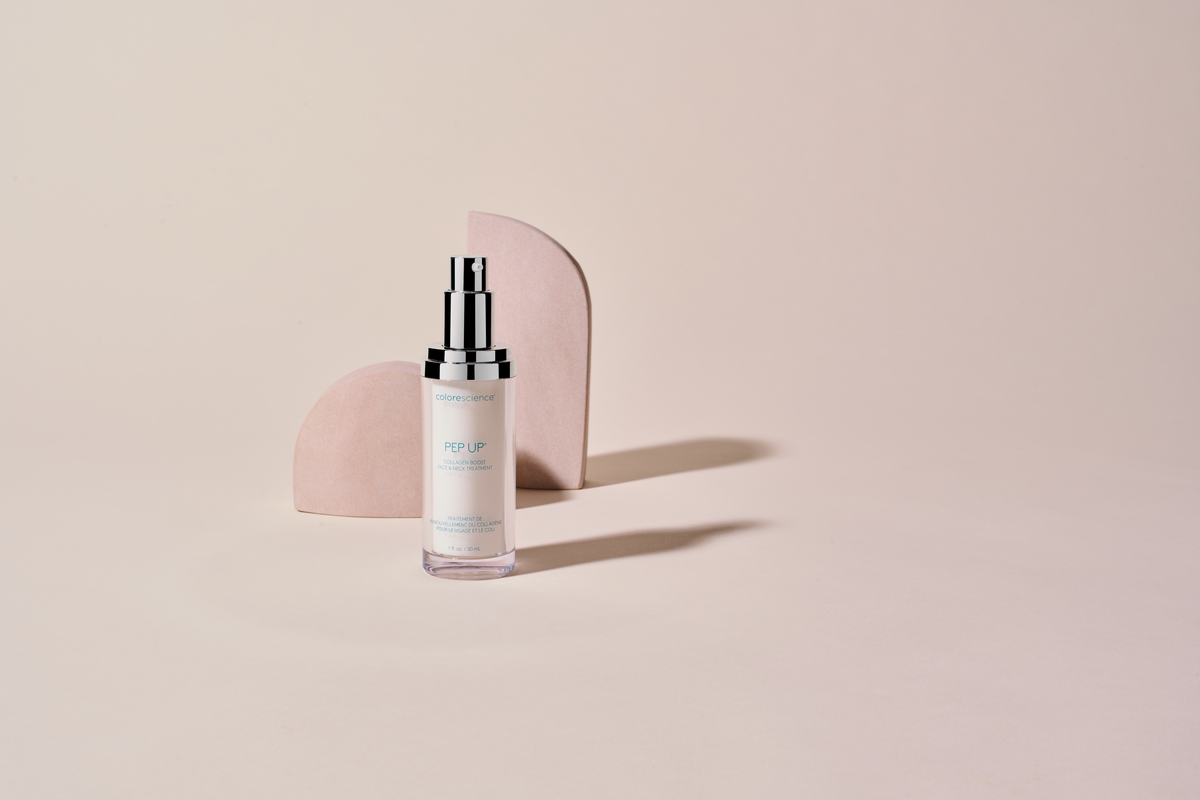
Products formulated with multiple peptides, like Pep Up® Collagen Boost Face & Neck Serum, combine 10 different peptides in a 22% complex to support collagen and elastin for smoother, firmer-looking skin. In a published 12-week study of 48 people using Pep Up twice daily, 89.6% showed clinical improvement in overall skin quality (Cayce et al., Journal of Cosmetic Dermatology).
What Can Peptides Do, and What Can't They Do?
Topical peptides are cosmetic ingredients. With consistent use, they can help improve the look of fine lines, firmness, texture, and hydration. They work gradually, and results are typically modest compared with in-office procedures.
You may have seen recent headlines about injectable or compounded peptides. Those are a different category: they aren't skincare, many aren't FDA-approved, and they're not what you'll find in a peptide serum. Topical peptides won't replace neuromodulators, fillers, or prescription retinoids, but they can be a gentle, well-tolerated part of a daily routine.
“I’m often asked whether a peptide can do what an injectable does, and the answer is no. A topical peptide can soften the look of fine lines over time, but it works on a different scale. When people know that going in, they’re much happier with their results.” — Alex Lang, Director of Global Education
Which Peptides Are Best for Anti-Aging and Firmness?
Not all peptides deliver the same results. Different types target specific aging concerns:
- For Firmness & Elasticity: Palmitoyl Tripeptide-5 is studied for its ability to signal collagen production and may help improve the look of firmness. Copper peptides are also studied for their role in supporting collagen and elastin.
- For Wrinkle Reduction: Dipeptide Diaminobutyroyl Benzylamide Diacetate helps soften the look of expression lines, including forehead lines, laugh lines, and crow's feet. Palmitoyl Tetrapeptide-7 has been shown in lab studies to reduce inflammatory signals linked to skin aging.
- For Skin Texture: Tripeptide-1 and Tripeptide-10 Citrulline work together to help improve the look of skin's surface smoothness.
- For Barrier Health & Hydration: Peptides paired with humectants like NS Phytomoist, which provides 4x more hydration than hyaluronic acid, deliver lasting moisture while strengthening your skin's protective barrier.
- For Brightening: Even Up® Multi-Correction Serum pairs a brightening complex with a moisturizing peptide (palmitoyl tetrapeptide-10, also known as Crystalide) to help reduce the look of dark spots.
- For the Eye Area: Total Eye® 3-in-1 Renewal Therapy SPF 35 pairs a peptide blend that helps smooth the look of fine lines with mineral SPF 35 for daytime. Total Eye® Firm & Repair Cream combines peptides with caffeine and nourishing oils to help reduce the look of dark circles, puffiness, and crepey skin; in clinical studies, 100% of participants felt their eye area was more hydrated after 8 weeks. For a lighter, cooling option, Total Eye® Concentrate Serum pairs palmitoyl tripeptide-5 with NS Phytomoist in a rollerball applicator.
- For Lips: Peptide Lip Shine SPF 30 pairs palmitoyl tripeptide-1 with mineral SPF 30 for a smoother, more plumped look and daily UV protection.
For peptides you choose, pair them with broad-spectrum sun protection. UV exposure remains the primary cause of premature aging. Total Protection® No-Show™ Mineral Sunscreen SPF 50 offers all-mineral protection against UVA/UVB rays while maintaining a completely sheer finish.
Wondering how collagen and peptides differ? Our guide to collagen vs. peptides explains the difference between the structural protein and the messenger molecules that help support it.
What Results Can You Expect from Peptides for Aging Skin?
With consistent twice-daily use, you may notice improved hydration and softer skin texture within the first few weeks. As you continue, many people observe their skin appearing plumper with a more even tone. Over time, ongoing use can support progressive improvement in overall skin quality, resilience, and radiance. Individual results vary based on age, skin condition, and consistency of use.
How Can You Spot Peptides on an Ingredient Label?
Trade names like Crystalide (palmitoyl tetrapeptide-10) often appear in marketing, but the ingredient list uses the standardized (INCI) name. Here's what to look for:
- Names ending in "-peptide." Look for tripeptide, tetrapeptide, pentapeptide, or hexapeptide, usually followed by a number (for example, palmitoyl tripeptide-5).
- "Palmitoyl" or "acetyl" at the front. These mean the peptide has been attached to a fatty acid (palmitoyl) or chemically modified (acetyl) to help it stay stable and move into the skin's upper layers.
- "Copper tripeptide-1." This is the copper peptide often called GHK-Cu.
- Placement on the list. Peptides work at low concentrations, so it's normal to see them in the middle or toward the end of an ingredient list.
How Should You Incorporate Peptides into Your Skincare Routine?
Layering matters. For best results:
- Cleanse thoroughly. Start with clean, slightly damp skin.
- Apply peptide serum. Dispense 1-2 pumps and pat gently into face and neck. Light tapping motions help press the product into the skin.
- Follow with moisturizer. Lock in the serum with a hydrating moisturizer that supports barrier health. Barrier Pro™ Essential Moisturizer, for example, contains palmitoyl tetrapeptide-10.
- Protect during the day. Always apply broad-spectrum SPF as your final morning step. Peptides help improve the look of existing lines; daily sunscreen helps prevent new visible damage.
- Repeat at night. Evening application keeps you on the twice-daily routine most peptide serums are tested with.
Peptides play well with other actives. You can use them alongside retinoids, vitamin C, and niacinamide, though you may want to introduce them gradually if you have sensitive skin.

Your Skin Deserves Science-Backed Solutions
Peptides help support collagen and a healthy skin barrier. The key to results? Consistent twice-daily use as part of a complete routine.
Explore our anti-aging collection featuring clinically tested peptide formulations that help improve the look of fine lines, firmness, and uneven tone, helping you maintain healthy, youthful-looking skin.
Peptides for Anti-Aging FAQs
Are peptides safe for sensitive skin?
Peptides are generally well tolerated and tend to be less irritating than retinoids or acids. As with any new product, patch test first if your skin is reactive.
How long do peptides take to work?
You may notice early improvements in hydration and texture within 2-4 weeks. Changes in the look of fine lines and firmness build gradually, so give a peptide serum 8 to 12 weeks of consistent use before judging results.
Can you use peptides with retinol?
Yes. Retinol increases cell turnover while peptides support collagen. Apply products from thinnest to thickest texture. If retinol irritates you, use it on alternate nights, or use peptides in the morning and retinol at night.
Do peptides work better than retinol for aging?
They work differently. Retinol speeds cell renewal and can address multiple concerns, while peptides specifically support structural proteins. Retinoids have the strongest research behind them of any topical anti-aging ingredient, with decades of studies on fine lines and texture. Peptides have a smaller but growing evidence base and are typically gentler, which makes them a good option if retinoids irritate your skin. Many people get the best results using both.
Should you use peptides in the morning or at night?
Both. Most peptide serums, including Pep Up, are studied with twice-daily use, so that's the routine we recommend. Morning application pairs well with your sunscreen; evening application fits easily alongside retinol or other night treatments.
Do peptides work like Botox?
No. Botox® is a prescription neuromodulator injected into the muscle by a licensed provider, and it temporarily stops that muscle from contracting. Topical peptides such as dipeptide diaminobutyroyl benzylamide diacetate work in the skin's upper layers, and studies suggest they can modestly soften the look of expression lines over time. They can be a good complement to in-office treatments, but they aren't a substitute.
Are copper peptide injections the same as topical peptides?
No. The copper peptide in skincare (listed as copper tripeptide-1, or GHK-Cu) is used in small cosmetic amounts and applied to the skin's surface. Injectable peptides sold through some clinics and online are typically compounded products that are not FDA-approved for skin aging, and they carry different risks. If you're considering an injectable, talk to a board-certified dermatologist first. If you already get in-office treatments, including injectables, a topical peptide serum is a smart everyday companion. Using a topical peptide serum twice daily, along with daily mineral sunscreen, helps support and maintain the look of your results between appointments.