
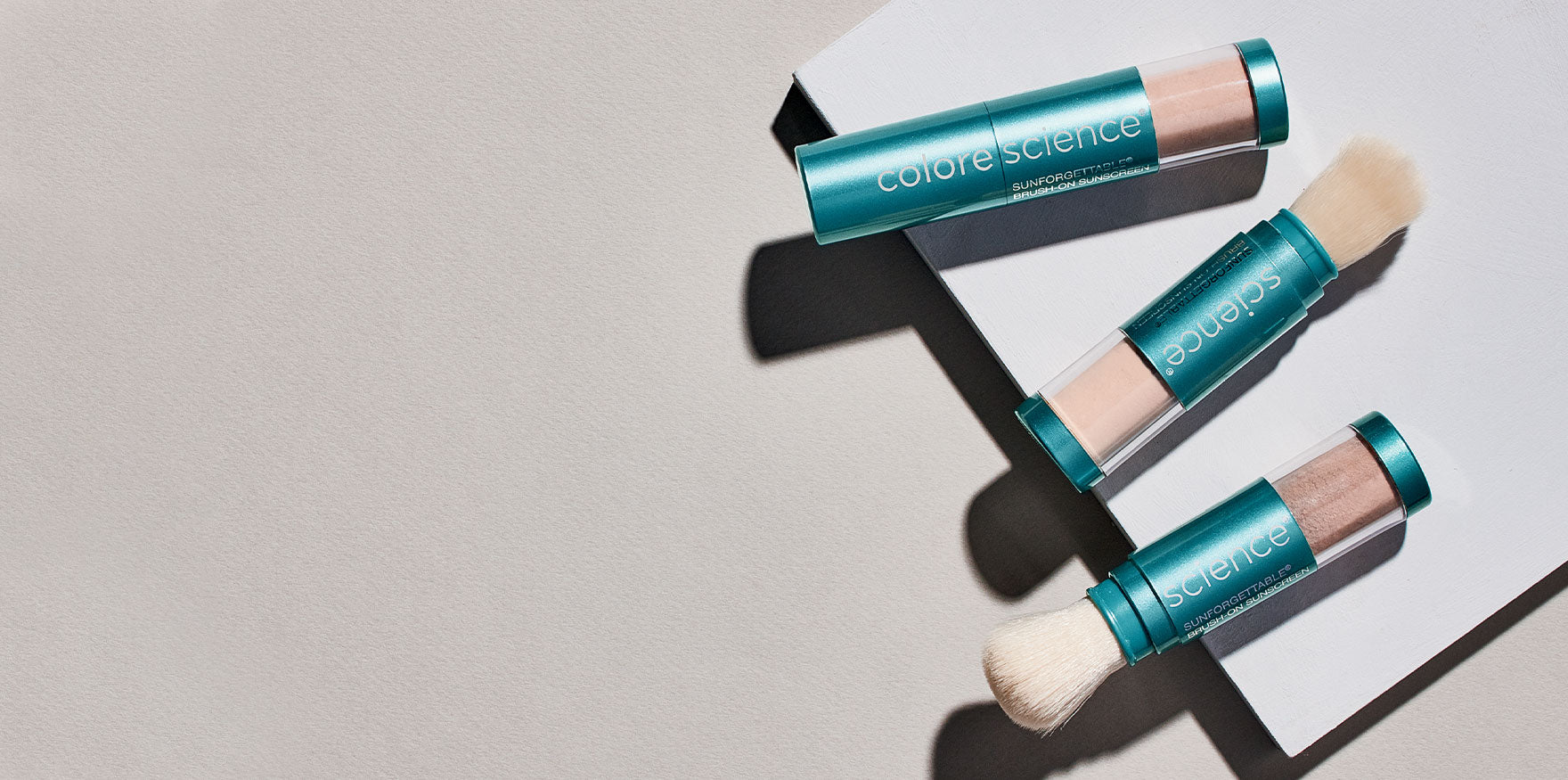

Tinted sunscreen contains iron oxides that block UV rays and visible light (including blue light) while providing sheer coverage to even skin tone. Untinted sunscreen focuses on UV protection without color, making it ideal for layering under makeup or for those who prefer a completely clear finish. Your choice depends on whether you want light coverage with enhanced environmental defense or pure protection that disappears on skin.
What Does Tinted Sunscreen Actually Do?
Tinted mineral sunscreen goes beyond basic UV protection. The iron oxides that give these formulas their color help block visible light, including blue light from screens and indoor lighting. That means you're getting broad-spectrum sun defense and visible light protection in one step.
A tinted sunscreen with iron oxides helps to block blue light, which is linked to dark spots and uneven skin tone. So if hyperpigmentation or melasma is a concern, tinted formulas can be a strong choice.
Sunforgettable® Total Protection® Face Shield Flex SPF 50 uses encapsulated pigments that adjust to your skin's natural tone as you blend. Available in six shades, this formula delivers tone-adapting coverage with a demi-matte finish. It protects against UVA/UVB rays, blue light, pollution, and infrared radiation. Most skin health professionals trust and recommend Flex for daily 5-point protection.
Benefits of Tinted SPF
-
Light coverage that can replace foundation on busy mornings
-
Iron oxides provide added defense against high-energy visible (HEV) light from screens
-
Helps even out skin tone and reduce the look of dark spots
-
One product does the work of sunscreen and light makeup
-
Niacinamide in Face Shield products may help control oil, reduce inflammation, fade acne scars, and strengthen the skin barrier
Considerations Before Choosing Tinted SPF
Finding your shade match matters. While many modern tinted sunscreens adapt to a wide range of skin tones and skin types, you may want to test the color on your jawline to see how it blends.
Some tinted formulas may transfer onto lighter clothing. If you're wearing a white top, it can help to let the product set for a minute or two before getting dressed.
What Tinted Sunscreen Brings to Your Routine
Tinted mineral sunscreen does more than just blend away the white cast you might remember from older formulas. The iron oxides that give these formulas their color serve a dual purpose: they help the sunscreen blend seamlessly into your skin while providing protection against visible light sources.
Sunforgettable® Total Protection® Face Shield Flex SPF 50 uses encapsulated pigments that adjust to your skin's natural tone as you blend. Available in six shades, this formula delivers tone-adapting coverage with a demi-matte finish, protecting against UVA/UVB rays, blue light, pollution, and infrared radiation.
The Benefits of Tinted Formulas
Tinted sunscreens offer light coverage that can replace or reduce your foundation use on busy mornings. The iron oxides in these formulas provide an added layer of defense against high-energy visible (HEV) light from screens and indoor lighting, something particularly relevant for those concerned about hyperpigmentation or melasma.
For skin prone to uneven tone or dark spots, the coverage element helps create a more uniform appearance while your skincare works beneath the surface. You're getting your sun protection and a polished look in one step.
What to Consider with Tinted SPF
Finding your shade match matters with tinted formulas. While many modern tinted sunscreens are designed to adapt to multiple skin tones, you'll want to test the color on your jawline to ensure it blends naturally.
Some tinted formulas may transfer onto lighter clothing, though this is less common with newer mineral formulations that set into the skin. If you're wearing a white collar or light-colored top, allow the product to set for a minute or two before getting dressed.
When Does Untinted Sunscreen Make More Sense?
Untinted mineral sunscreen is a smart pick when you want pure UV protection without any color. It layers invisibly under foundation, won't shift your makeup shade, and works well on areas beyond your face like your neck, chest, and hands.
Total Protection® No-Show™ Mineral Sunscreen SPF 50 offers all-mineral defense with a completely sheer finish. Advanced non-nano zinc oxide blends clear without the white cast older mineral formulas used to leave behind.
Benefits of Untinted SPF
-
Works as an invisible base under your regular makeup routine
-
Won't interfere with your foundation shade or undertone
-
Applies easily to neck, chest, hands, and body without visible product
-
A solid option for anyone who prefers a clean, no-makeup feel
Considerations Before Choosing Untinted SPFA
Older mineral formulas sometimes left a white cast, especially on deeper skin tones. Newer formulations use advanced zinc oxide technology that blends more sheerly. Applying the product in one direction and letting it set for a moment can help you get a clear, smooth finish.
Untinted formulas don't include iron oxides, so they don't offer the same visible light protection that tinted options do. If you spend a lot of time in front of screens, you might consider pairing your untinted sunscreen with other protective steps.
How to Choose the Right Tinted Sunscreen Shade
Picking a tinted sunscreen shade doesn't have to be stressful. Here's what can help:
-
Start with your jawline. Apply a small amount along your jawline rather than your hand. The skin there is closest to your face's true tone and shows how the color blends in natural light.
-
Look for tone-adapting formulas. Some tinted sunscreens use encapsulated pigments that flex to match your skin as you blend. This takes a lot of the guesswork out of shade matching. Face Shield Flex SPF 50, for example, adjusts to your natural tone and comes in six shades designed to work across a wide range of skin tones and skin types.
-
Check in natural light. Indoor lighting can make shades look different. Step near a window or outside to see how the formula really looks on your skin before committing.
-
Build coverage gradually. Start with a thin layer and add more if you want extra coverage. This lets you control the finish without going too heavy.
Comprehensive Comparison: Tinted vs Untinted Sunscreen
|
Feature |
Tinted Sunscreen |
Untinted Sunscreen |
|
UV Protection |
Broad-spectrum UVA/UVB |
Broad-spectrum UVA/UVB |
|
Visible Light Protection |
Yes (iron oxides block 400-700nm wavelengths) |
No visible light protection |
|
Blue Light Defense |
Enhanced protection from screens and indoor lighting |
Limited to no blue light blocking |
|
Key Active Ingredients |
Zinc oxide, titanium dioxide, iron oxides, pigmentary titanium dioxide |
Zinc oxide, titanium dioxide |
|
Finish |
Demi-matte to luminous with subtle tint |
Completely clear, invisible |
|
Coverage |
Light, tone-evening coverage |
No coverage |
|
Best for Hyperpigmentation |
Superior - addresses both UV and VL triggers |
Good - addresses UV triggers only |
|
Best for Melasma |
Clinical evidence shows improved pigmentation uniformity |
Prevents UV-induced darkening |
|
Ideal Under Makeup |
Can replace foundation on minimal-makeup days |
Perfect invisible base for full makeup |
|
Shade Matching |
Requires finding your tone (most adapt to multiple shades) |
One formula for all skin tones |
How to Choose Between Tinted and Untinted Sunscreen
Your decision comes down to your daily routine, skin concerns, and aesthetic preferences.
Consider tinted sunscreen if you:
- Want light coverage that evens your skin tone
- Have concerns about hyperpigmentation or melasma
- Spend considerable time in front of screens
- Prefer a streamlined routine with fewer products
- Like a makeup-optional look for daily wear
Consider untinted sunscreen if you:
- Wear full coverage foundation and want to control your exact shade
- Prefer a completely invisible base layer
- Apply sunscreen to areas beyond your face regularly
- Want to avoid any possibility of color transfer
- Have very fair skin that works with clear formulas
Consider both: Many people find that having both options available gives them flexibility. Tinted sunscreen for minimal-makeup days, untinted for when you want your foundation to take center stage.
What if You Have Fair Skin and Worry About Looking Orange?
Finding the best tinted sunscreen for fair skin without looking orange comes down to two things: the right shade and the right formula.
Look for tinted sunscreens with tone-adapting technology. These formulas use micro-pigments that blend with your individual undertone instead of sitting on top of your skin as a flat color. That's what prevents the orange or muddy look.
A few tips that can help:
-
Choose the lightest shade available and build up if needed
-
Blend well along the hairline and jawline so there's no visible line
-
Avoid formulas with heavy warm pigments unless your undertone leans warm
-
Test before you commit by applying to a small patch and waiting a minute to see how it settles
Face Shield Flex SPF 50 in the lightest shade is designed to adapt rather than mask, so it blends without that artificial cast that heavier tinted formulas can leave.
Making It Work for Your Skin
For a Natural, Luminous Look
Sunforgettable® Total Protection® Face Shield Glow SPF 50 adds a champagne-lit finish to your complexion. The peachy-golden tint works across skin tones, providing that subtle radiance without shimmer or glitter.
For a Sun-Kissed Warmth
Sunforgettable® Total Protection® Face Shield Bronze SPF 50 offers all-over warmth with the same broad-spectrum protection. It's like having a healthy glow without the sun damage.
Application Tips That Make a Difference
Regardless of which formula you choose, proper application ensures you get the full SPF protection:
- Shake well before each use
- Apply at least a nickel-sized amount to your face
- For untinted formulas on deeper skin tones, apply in small amounts and blend in layers
- Allow the product to set for 1-2 minutes before applying additional products
- Reapply every two hours when spending time outdoors
Can You Wear Tinted Sunscreen Indoors Too?
Yes, and it’s recommended . Even when you're inside, your skin is exposed to visible light from screens, overhead lighting, and windows. Tinted sunscreen with iron oxides helps block that blue light, which can contribute to dark spots and premature signs of aging over time.
If you work from home or spend most of your day in front of a computer, a tinted mineral sunscreen like Face Shield Flex SPF 50 gives you both UV and visible light protection without needing a full makeup routine.
The Bottom Line
Neither tinted nor untinted sunscreen is inherently "better"; they simply serve different needs. Tinted formulas offer the added benefit of light coverage and visible light protection, making them efficient for streamlined routines. Untinted options provide pure UV defense without affecting your makeup choices.
Your skin deserves protection that works with your life, not against it. Whether you choose tinted or untinted sunscreen (or keep both on hand), consistent daily SPF use remains the most important factor in maintaining healthy, protected skin.
Ready to find your perfect sunscreen match? Browse our complete mineral sunscreen collection or shop our best-selling protection products to build your ideal sun care routine.
Frequently Asked Questions
Does tinted or untinted sunscreen offer better UV protection?
Both provide equal UV protection when formulated at the same SPF level. Tinted versions offer additional visible light defense through iron oxides, while untinted formulas focus solely on UV protection.
Will tinted sunscreen match my skin tone?
Modern tinted sunscreens use tone-adapting technology with encapsulated pigments that adjust to various skin tones. Testing on your jawline helps ensure a natural match.
Can I wear untinted sunscreen under makeup?
Yes, untinted mineral sunscreen works beautifully as a base layer under foundation and won't interfere with your makeup color. Allow it to set for a minute before applying additional products.
Which sunscreen type is better for hyperpigmentation?
Tinted sunscreens with iron oxides provide enhanced protection against visible light that can trigger dark spots and melasma, making them particularly beneficial for hyperpigmentation-prone skin.
Do I need to reapply tinted sunscreen as often as untinted?
All sunscreens require reapplication every two hours during sun exposure, regardless of whether they're tinted or untinted. Water and sweat resistance lasts up to 40 minutes with most mineral formulas.
What is the best tinted sunscreen for fair skin that won't look orange?
Look for formulas with tone-adapting technology that blend with your individual undertone. Face Shield Flex SPF 50 uses encapsulated pigments designed to flex with your natural skin tone rather than sit on top of it. Starting with the lightest shade and building up is a good approach.